
South-east coast, South Korea
Busan
Busan is Korea's second city and main port, and gives a trip a different look from Seoul: beaches, hillside villages, seafood markets and a coastline you can film in a day. Most creators reach it from Seoul by KTX high-speed train in roughly two and a half to three hours, and it suits trips of Signature tier and above.
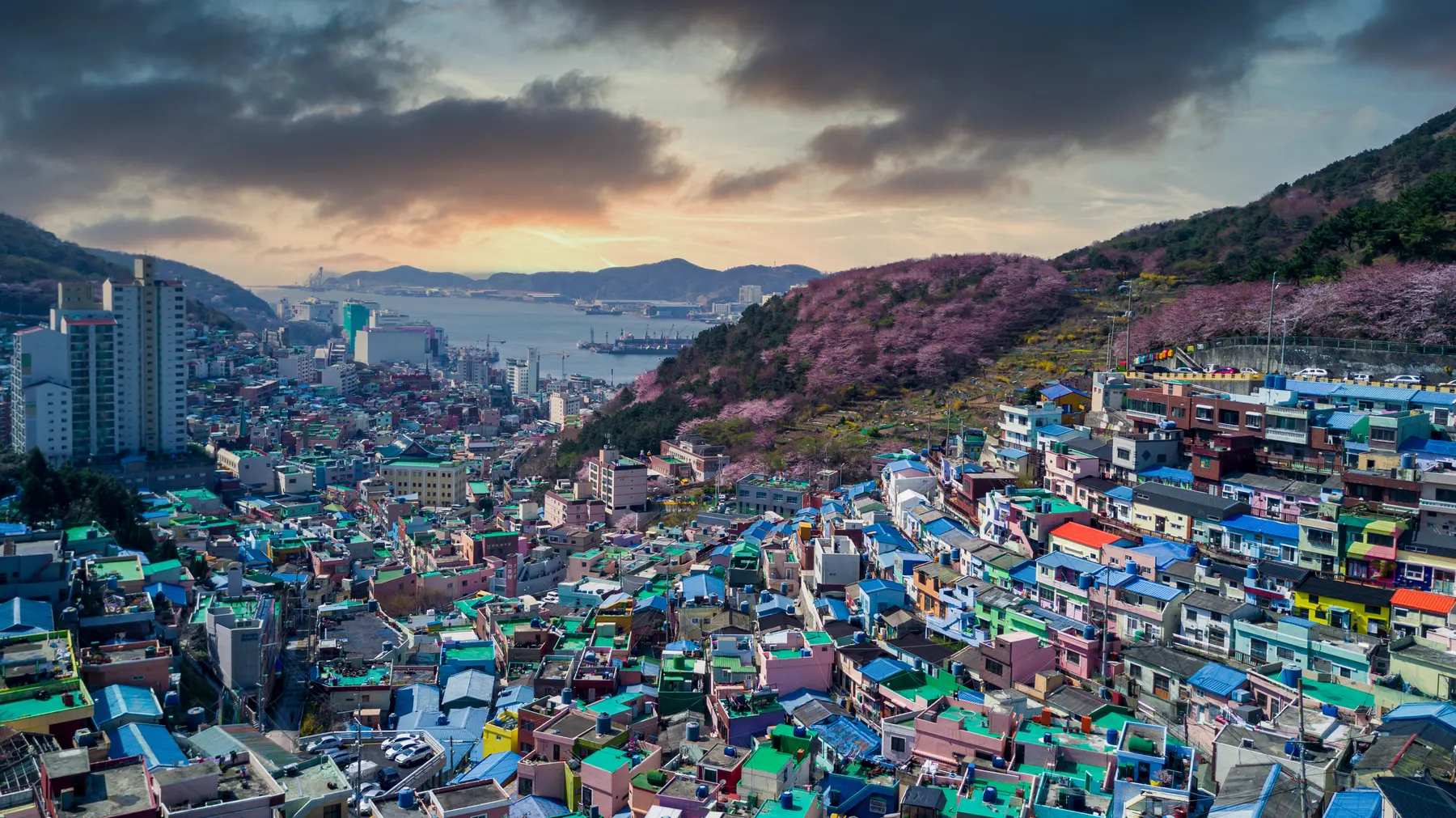
Gamcheon Culture Village, Busan
What can creators film in Busan?
Busan gives you the coast, the port and the hills in one city, and it looks nothing like Seoul. Almost every frame has either water or a steep slope in it.
- Gamcheon Culture Village: painted houses stepping down the hillside above the port, a neighbourhood first settled by refugees during the Korean War.
- Haeundae and the east coast: the main beach, the coastal path around Dongbaek Island, the towers of Marine City, and the Blueline Park beach train and sky capsules between Mipo and Songjeong.
- Gwangalli: a city beach facing Gwangan Bridge, which is lit in changing colours after dark.
- Haedong Yonggungsa: a Buddhist temple built on the rocks by the sea.
- Yeongdo: the cliffs of Taejongdae and Huinnyeoul Culture Village, a narrow lane of houses above the water.
- Markets: Jagalchi for seafood, and Gukje Market and the BIFF Square area for street snacks such as ssiat hotteok, a seed-filled sweet pancake.
When is the best time to film in Busan?
May, June, September and October are the best months to film Busan: warm enough for the beaches, without the peak-summer crowds.
- Spring: clear days on the coast and blossom along local streets and rivers.
- Summer: July and August are beach season, with humidity, packed sand and faces in every frame. Early mornings are the clean window.
- Late summer and early autumn: typhoons can reach the south coast, and coastal plans can move at short notice for safety.
- Autumn: the Busan International Film Festival and a fireworks show over Gwangalli usually fall in autumn. Dates change every year, and both bring large crowds.
- Winter: milder than Seoul but windy by the sea. The beaches are almost empty, which suits quieter, moodier coastal footage.
What does a hosted day in Busan look like?
A hosted Busan day usually splits into a hillside or culture morning and a coastal afternoon and evening. A common shape is Gamcheon early, before the lanes fill, lunch near the port and Jagalchi, then Haeundae or the coastal path in the afternoon, and Gwangalli for the bridge lights after dark.
Distances are bigger than they look on the map, and the city wraps around hills and bays, so we keep each day to one side of Busan where we can. Which activities are included, and how many days are filled, depends on your tier: see the programme.
Getting around Busan
Most creators reach Busan from Seoul by KTX high-speed train, and how you travel between the two is agreed in your itinerary before you sign. Busan also has its own international airport, Gimhae, which lets you fly into Seoul and out of Busan without backtracking. Your flights are always yours to book and pay for. In the city, the subway covers the main districts and takes the same T-money card as Seoul, and agreed activity days use private transport.
What are the filming rules in Busan?
The main rule in Busan is that many of its best-known spots are places where people live and work, so permission and quiet come first.
- Gamcheon and Huinnyeoul: both are residential. Stay on public lanes, keep noise down and do not film into windows or courtyards.
- Markets: Jagalchi's vendors are working. Ask before filming, buy from the stall you feature, and keep out of the way of trolleys and ice.
- Temples: Haedong Yonggungsa is an active temple and busy at weekends. Keep quiet near the halls and do not film people praying without permission.
- Beaches: crowded in summer. Blur strangers, and especially children, who appear clearly in frame.
- Drones: restrictions apply here too, including around the port, naval areas and Gimhae airport. Check the current rules before you fly, and assume no drone shots unless they are agreed in writing.
How does Busan fit a multi-stop trip?
Busan is the usual second base after Seoul, and it works best on longer tiers where there are enough nights to stay rather than visit for a day. Gyeongju sits between the two cities and makes a good stop on the way. If your channel is strongest after dark, see how we plan the nightlife niche across both cities, then give us your dates when you apply.
Ready to apply for Busan?
The application saves as you go, and every applicant hears back within 5 business days.
Updated