
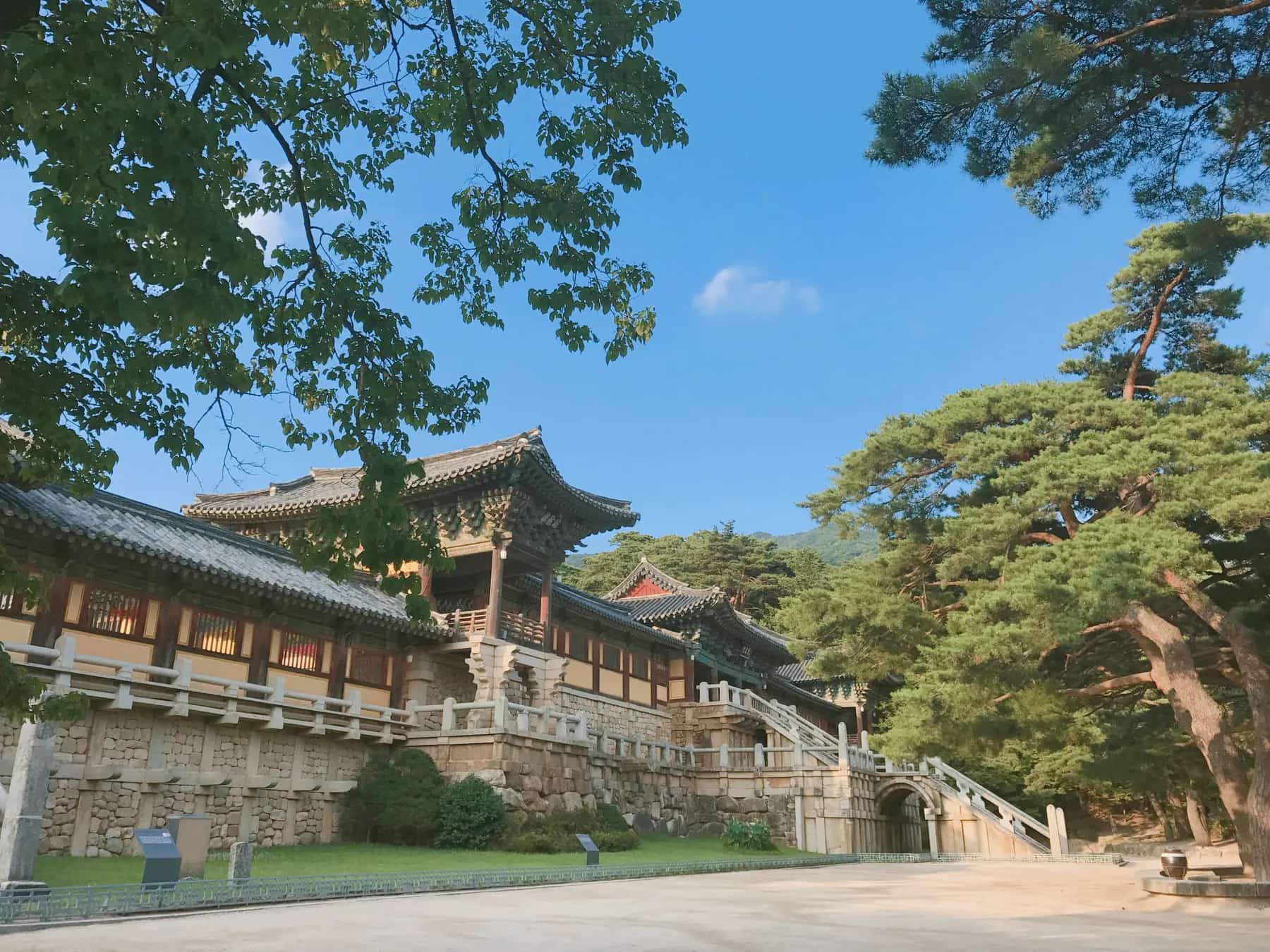
North Gyeongsang province, south-east South Korea
Gyeongju
Gyeongju was the capital of the Silla kingdom for close to a thousand years, and the city still sits among royal burial mounds, temples and palace ponds. It suits culture and history channels and fits naturally between Seoul and Busan, so it works best on Signature tier trips and above.
Bulguksa, Gyeongju
What can creators film in Gyeongju?
Gyeongju was the capital of the Silla kingdom, and much of the old city is now open parkland, so royal tombs, temples and palace ponds sit inside the modern town. Several areas are on the UNESCO World Heritage list, including the Gyeongju Historic Areas and Bulguksa with the Seokguram grotto.
- Daereungwon: the grassy royal burial mounds in the centre of town, including one tomb you can walk inside.
- Cheomseongdae: a stone observatory standing in open fields that change colour with the seasons.
- Donggung Palace and Wolji Pond: pavilions reflected in still water, best after dark.
- Woljeonggyo: a reconstructed covered bridge, lit at night.
- Bulguksa and Seokguram: a temple and a mountain grotto in the hills east of the town.
- Hwangnidan-gil and Gyochon: hanok streets with cafés, bakeries and small shops.
- Yangdong Folk Village: a traditional clan village outside the city that people still live in.
When is the best time to film in Gyeongju?
Early April and late October to mid-November are the best times to film Gyeongju, when blossom or autumn colour frames the tombs and temples.
- Spring: cherry blossom around Bomun Lake and along the roads near the tombs.
- Summer: hot and wet during the monsoon, though the lotus ponds near the historic area flower in summer.
- Autumn: maple colour at Bulguksa, ginkgo near the tombs, and pink muhly grass in the fields around Cheomseongdae.
- Winter: cold and quiet, with the emptiest frames of the year.
What does a hosted day in Gyeongju look like?
A hosted Gyeongju day usually starts early in the hills at Bulguksa and Seokguram, comes back into town for the tombs and Hwangnidan-gil in the afternoon, and ends at Wolji Pond after dark. The central sites are close together, so the afternoon can be walked or cycled, which gives easy, natural footage.
The night views are the main draw for many creators, so we plan dinner around the time the lights come on at the pond and the bridge.
Getting to and around Gyeongju
Gyeongju is on the KTX line between Seoul and Busan, but its high-speed station sits outside the historic centre, so you need a transfer into town. How you travel to Gyeongju, and between the sites, is agreed in the itinerary before you sign. From Busan it is close enough for a day trip, though staying a night lets you film the pond after dark without a late return.
Etiquette and filming rules in Gyeongju
Gyeongju's sites are graves, working temples and lived-in villages, so the rule is to film them as places that matter to people, not as sets.
- Tombs: do not climb, sit or stand on the burial mounds, and keep to the paths.
- Temples: keep quiet near the halls, take your shoes off where asked, and do not film monks or worshippers without permission.
- Seokguram: photography is not allowed inside the grotto.
- Villages: Yangdong and the hanok streets have residents. Do not walk into private courtyards.
- Drones: heritage areas have their own restrictions. Check the current rules before flying.
Which channels suit Gyeongju?
Gyeongju suits culture, history and slow-travel channels, and its compact, walkable centre works for family and budget content too. Hanok stays, the bakeries of Hwangnidan-gil and evenings by the pond give lifestyle creators a softer angle than the temples alone.
How does Gyeongju fit a multi-stop trip?
Gyeongju works best as a chapter between Seoul and Busan, adding close to a thousand years of history between the capital and the coast. It suits culture and history channels above all; the culture niche page sets out the route we usually suggest. Mention Gyeongju in your application if you want it.
Ready to apply for Gyeongju?
The application saves as you go, and every applicant hears back within 5 business days.
Updated